Quack AI Lured the Bulls In, Then Pulled the Plug
Forty-Four Fuses
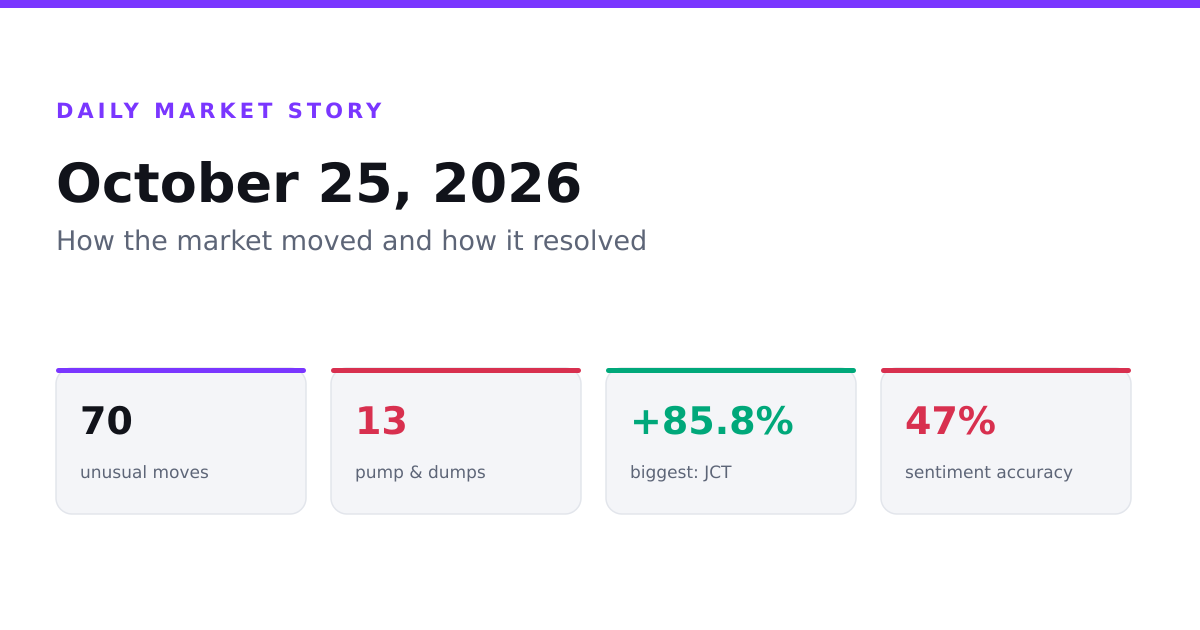
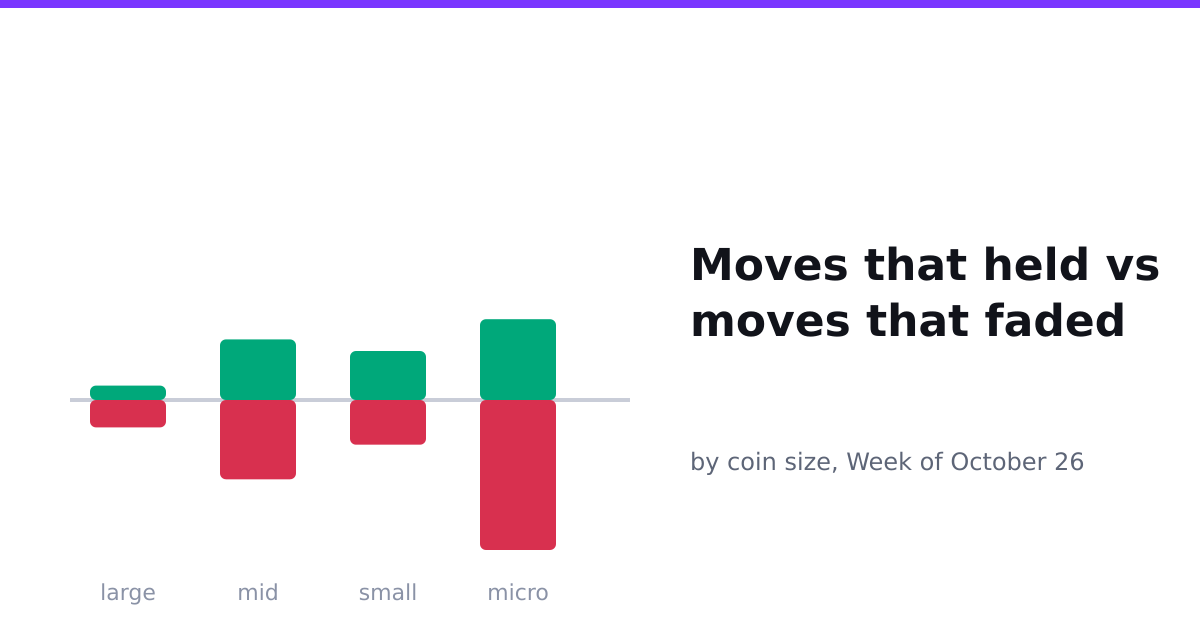
Count them: forty-four. That is how many moves across the week of October 26 to November 1, 2026 lit up green, pulled a crowd in, and then quietly reversed into confirmed pump and dumps. Out of 351 unusual moves that played out, forty-four were not what they looked like at first glance.
That is not a quiet number. It is the kind of ratio that turns a watchlist into a minefield, where the difference between a real breakout and a staged one comes down to who is still holding when the music stops. Most of these happened in the micro-cap corners, where liquidity is thin enough that a modest push moves the whole chart and an equally modest exit guts it.
The week had its honest winners too. Infinity Ground ran up 120.9% and kept a genuine 89.5% of it, which is the sort of follow-through you almost never see twice in seven days. But the headline of this week is not what went up. It is what went up on purpose, then came down with a plan.
*Previously: Infinity Ground Jumped 60% and Kept a Sliver of It*
And no single chart illustrated that better than a coin named after a duck.
Three Numbers That Tell the Whole Sad Tale
If you want the anatomy of a trap in its purest form, Quack AI handed it over in three figures.
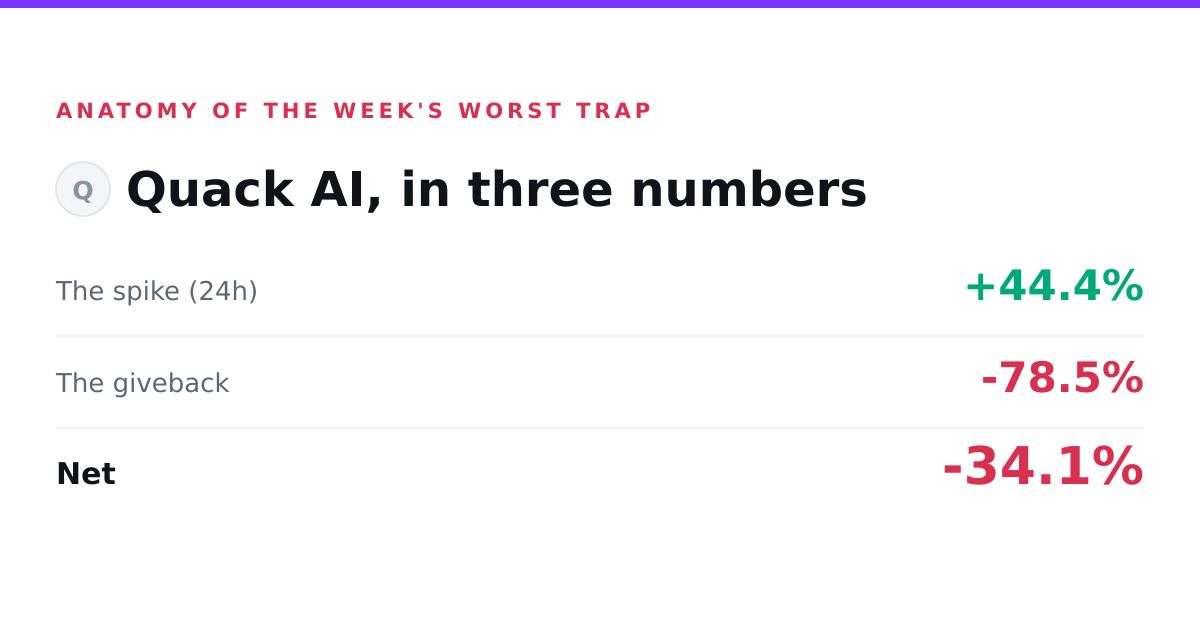
The spike: 44.4%. The finish: down 34.1%. And the advance warning, the part that stings, is that hardly anyone saw it coming.
Put those together and you have the week's worst reversal measured by sheer whiplash. A move north of forty percent is the kind of candle that makes a chart look like it has found a second life. The collapse that followed turned that same candle into a cautionary tale. From the top to the bottom, Quack AI traveled a distance that would make most coins seasick.
The name writes half the joke for you. A coin called Quack AI spiking and then face-planting is the market handing a pun to anyone willing to catch it. But the mechanics underneath were not funny at all for anyone who bought the climb.
The Replay, In Slow Motion
Here is how it actually unfolded.
The setup was ordinary. Quack AI sat in the thin-liquidity part of the board, the stretch where a coin can go from invisible to interesting in the space of a single aggressive buyer. Nothing on the surface screamed warning.
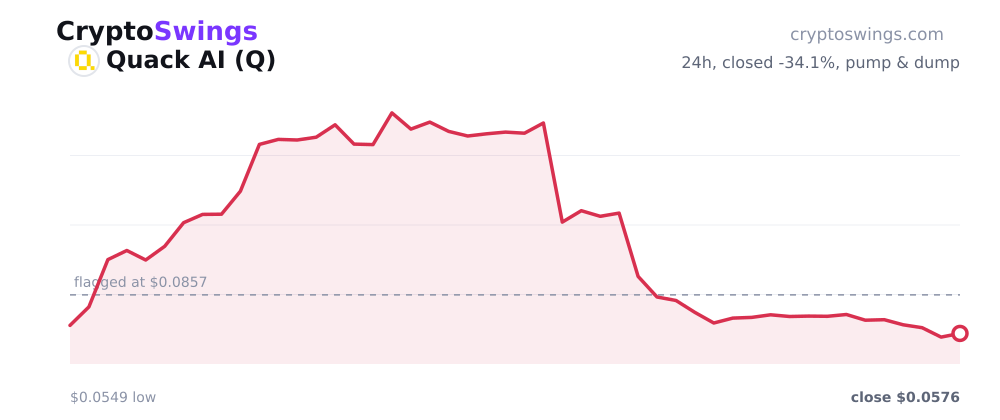
Then came the move. The chart lifted 44.4%, fast enough to register as an unusual move, steep enough to pull in the kind of attention a micro-cap usually dreams about. For a little while it looked like a story worth telling. Green begets green, buyers arrive to buy because other buyers already did, and the whole thing runs on momentum borrowed from itself.
The resolution was the problem. The buyers at the bottom were not building a position. They were setting a table. Once enough latecomers had piled in, the selling started, and in a market this shallow there is no cushion to catch it. The 44.4% gain did not fade gracefully. It inverted. By the time the move finished writing itself, Quack AI was down 34.1%, a full reversal from a convincing high to an ugly low.
And because hardly anyone had flagged the risk ahead of time, the reversal did most of its damage before the realization arrived. That is the cruelty of a well-built pump. The alarm only rings after the room has emptied.
Quack AI, it turns out, showed up twice on the week's trap roster. The second appearance was smaller, a modest 3.1% spike that still slid to a 7.5% loss. Once a coin develops a habit, the chart stops pretending to be surprised.
A Roster of Quiet Ambushes
Quack AI was the loudest, but it had plenty of company, and the pattern across the full list is remarkably consistent: a spike that looks like opportunity, a finish that looks like regret.
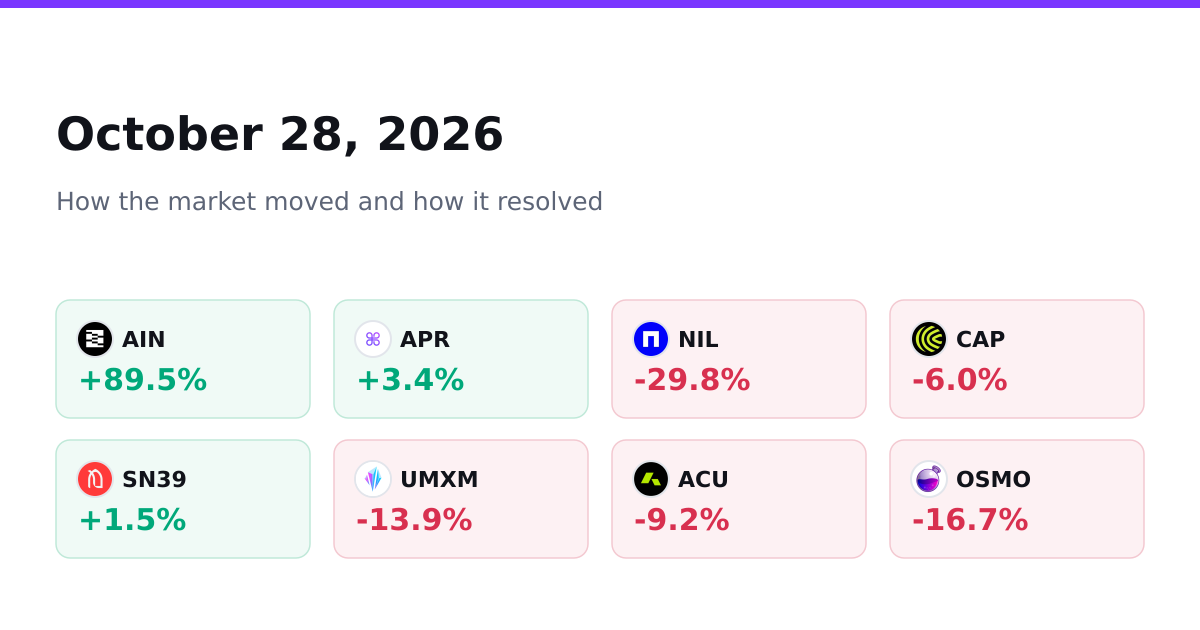
Pocket Network ran up 17.2% and ended down 33.6%, one of the deepest holes on the board relative to how gentle its climb looked. Nillion jumped 29.3% and gave back more than all of it, landing at a 29.8% loss. Ritual spiked 29.8% and closed down 22.9%. Definitive climbed 17.9% and sank to a 24.6% loss. BORA posted a tidy 26.9% gain before reversing into a 21.3% drop.
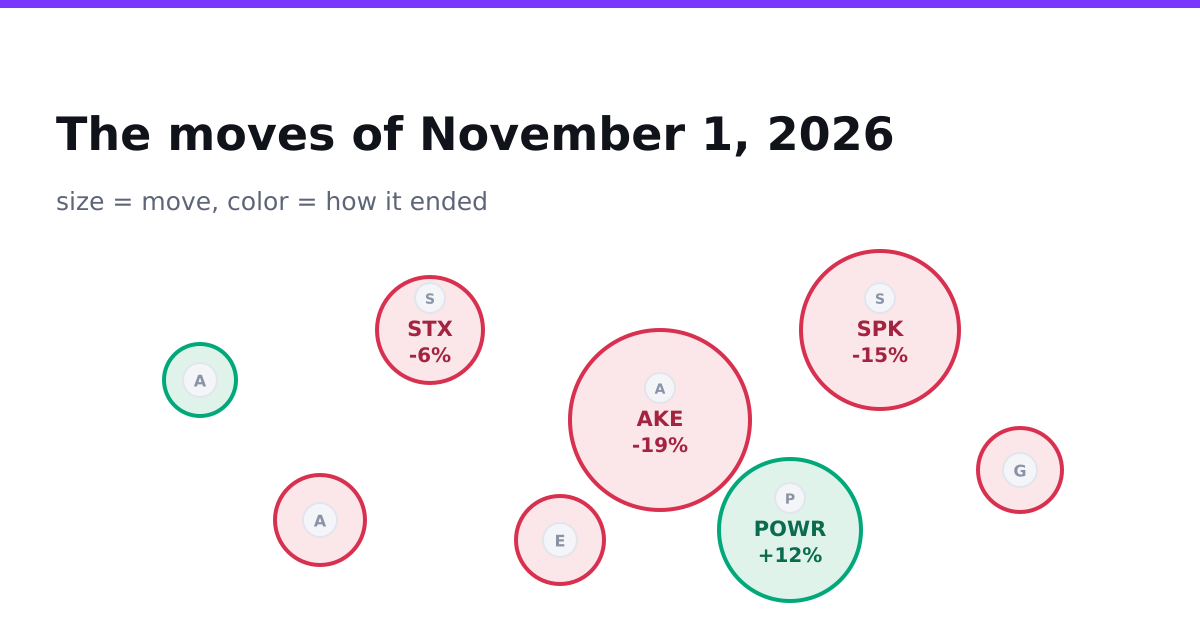
Not every trap pointed down. A handful ran the play in reverse, dipping first to shake out nervous holders before snapping higher. Bitway dropped 31.5% and then reversed all the way to a 41.7% gain. Optimism dipped 13.8% and finished up 23.9%, true to a name that apparently meant it. LayerZero and Plasma pulled the same inverted trick, falling before rallying. Those are the traps that punish the sellers instead of the buyers, which is just the same ambush wearing the opposite jacket.
The sizes ranged from violent to barely-there. Monero wobbled 3.2% up and 3.2% back down, a trap so small it is almost polite. Dogecoin moved 3% and settled at a 2% loss. These are the kind of ripples that barely register, which is exactly why they are worth noting: the mechanism scales all the way down.
What ties nearly the entire list together is that chilling little tag. Across most of these, hardly anyone saw it coming. On CryptoSwings the ones that slip past unnoticed tend to be the ones that leave a mark, and this week the unnoticed column was crowded. A few carried a minority of early doubters. Only a scattered handful, Definitive and one appearance from Zcash among them, were spotted broadly ahead of time. The rest arrived as surprises, which is precisely how a trap prefers to travel.
When the Read Kept Missing
Reading these moves in advance was, to put it kindly, not the week's strong suit.
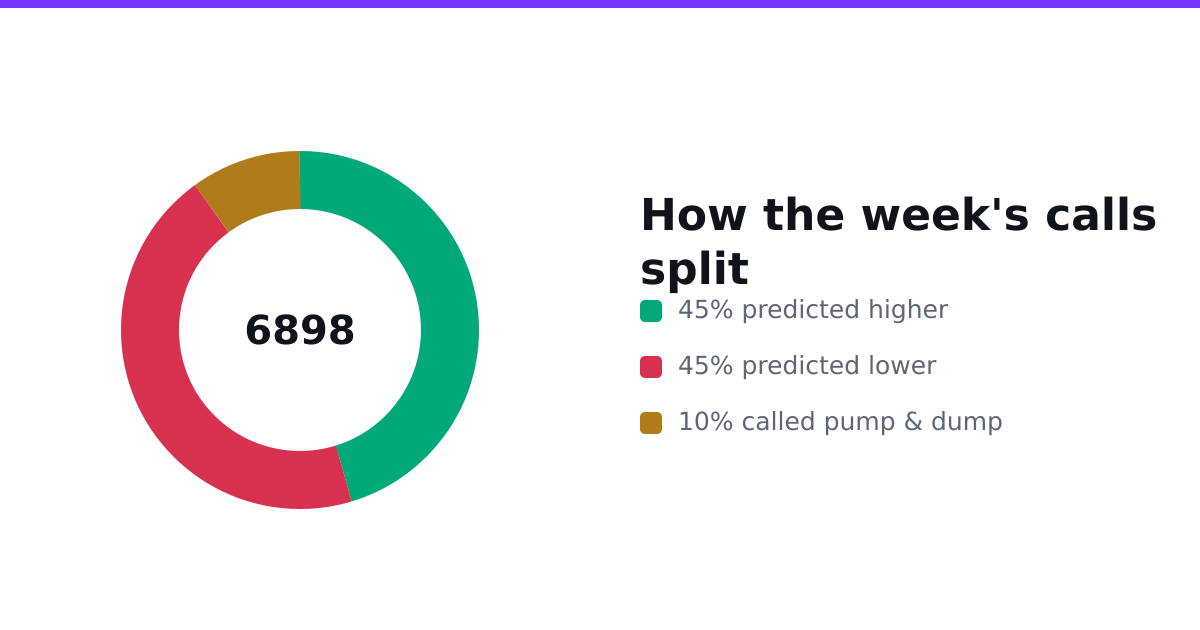
Across the week, community sentiment landed on the right side about 43% of the time. That is worse than a shrug. Even some of the clean, legitimate moves slipped past the read entirely. Grove staged the single biggest detected move of the week, a staggering 225.4% climb, and then surrendered almost all of it to finish down 47%. The leaning going in was narrowly bullish. It was wrong.
Not every call missed. The read on Infinity Ground's big run was strongly bullish and correct, and Doodles was pegged correctly to the downside before it closed down 13.4%. But the broad pattern of the week was a market that kept doing the opposite of what the easy interpretation suggested. Capricorn drew a slightly bearish lean and then ticked up 3.4%, small but contrary, before showing up on the trap list later with a move that went the other way.
When the obvious read is right less than half the time, the obvious read is not a tool. It is a coin flip with extra steps.
What the Week Actually Said
Strip away the individual charts and the lesson of this week is almost architectural. Forty-four times, a move was built to look like one thing and resolve as another. The spike is the bait. The reversal is the point.
Quack AI gave the cleanest demonstration, going from a 44.4% high to a 34.1% low with almost no one calling it in advance. But it was a representative, not an outlier. The common thread running through the whole roster is that the move that announces itself loudest is often the one setting a trap, and the quiet absence of early warning is not comfort. It is the trap working as designed.
A real breakout and a staged one can look identical right up until the moment they stop. This week, forty-four of them stopped the hard way.