ResearchCoin Climbed 25% on Paper and Kept Almost None
A Quarter of a Coin That Wasn't Really There
Twenty-five point four percent. That is how much ResearchCoin gained on June 7, 2026, before reality caught up with the math.
It is a big number for a micro-cap. It is the kind of number that turns heads, fills chat rooms, and convinces people that something is finally happening. And then it is the kind of number that vanishes so completely you start to wonder whether you imagined it. A quarter of a coin's value showed up, hung around just long enough to be believed, then quietly left.
That is the whole story of the day, told in one ticker.
The Setup, the Spike, the Slow Leak
ResearchCoin spent the day doing the thing micro-caps do best: promising more than it could keep.
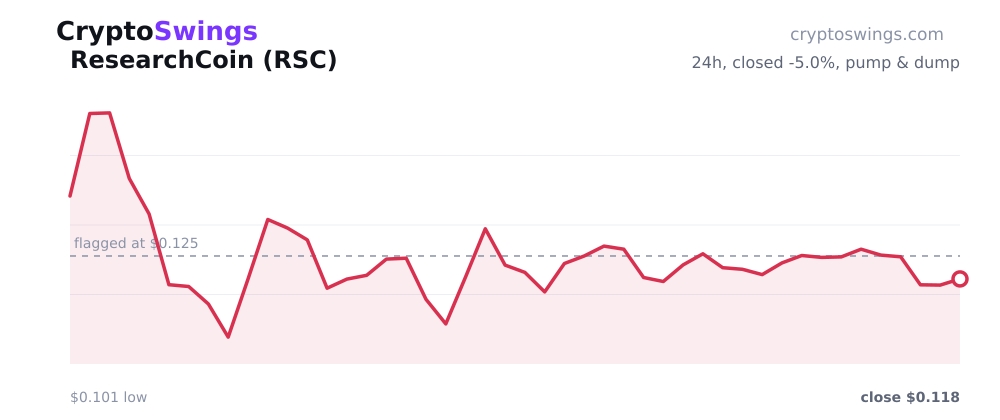
The move built over the course of a day rather than in one violent candle, which is part of what made it convincing. Fast spikes scare people. Slow ones reassure them. By the time RSC was up better than 25%, sentiment had narrowly tipped bullish, the read being that this was the start of something rather than the middle of nothing.
It was the middle of nothing.
The climb stalled. The sellers who needed higher prices to exit found their buyers, took what they came for, and the floor under RSC simply stopped being a floor. The gain didn't crash so much as deflate, air leaking out steadily until what was left looked nothing like the chart that had everyone leaning in.
This was the day's first confirmed pump and dump, and on this particular day there were seven of them. ResearchCoin just happened to wear the biggest opening number.
How 25% Became Minus Five
The arithmetic is the cruelest part of the story.
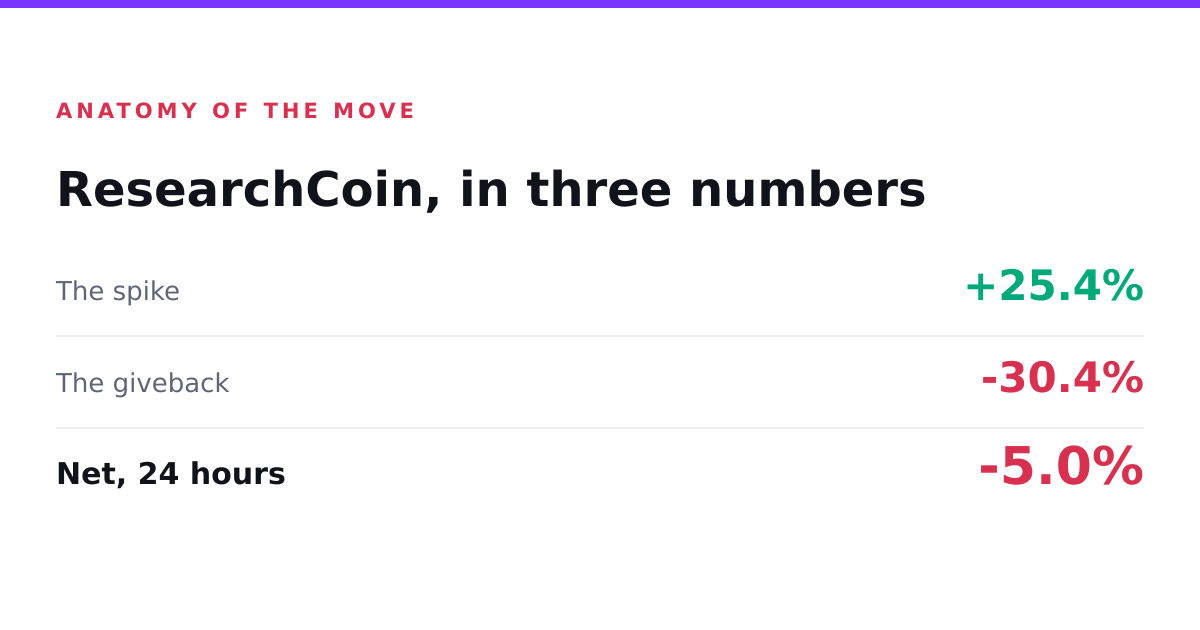
Start with the detected move: up 25.4% at its best. End with the final move: down 5%. Between those two figures sits the entire distance the optimists fell, more than thirty points of round-trip, all of it gone and then some.
The bullish lean was the third number, the human one, and it pointed exactly the wrong way. Up at the top, the read leaned hopeful. At the bottom, the tape had the final word.
What's quietly remarkable is how ordinary a 5% loss looks on a closing screen. Anyone glancing at it cold would shrug. Only the people who watched the 25% appear and disappear know how much movement is buried under that polite little minus sign.
The Rest of the Board Was No Kinder
ResearchCoin was the headline, but it had company in the wreckage. Heima made RSC's slow leak look gentle, cratering 45.6% in another confirmed pump and dump, with the bearish read on it being one of the day's few that actually landed. Allora ran the same playbook for a 12.4% loss, optimism and outcome once again disagreeing. SEALCOIN slid 16.3% without any manipulation flag, just an honest bad day. Alpha Quark shed 9.9%, also engineered. Status drifted down 7.5%. On the green side, where green was scarce, BRLA Digital managed a 16% gain that still carried a pump-and-dump tag, while Bonfida added 6.7% and Lorenzo Protocol inched up 3.9%, the rare moves that closed where they started the day climbing.
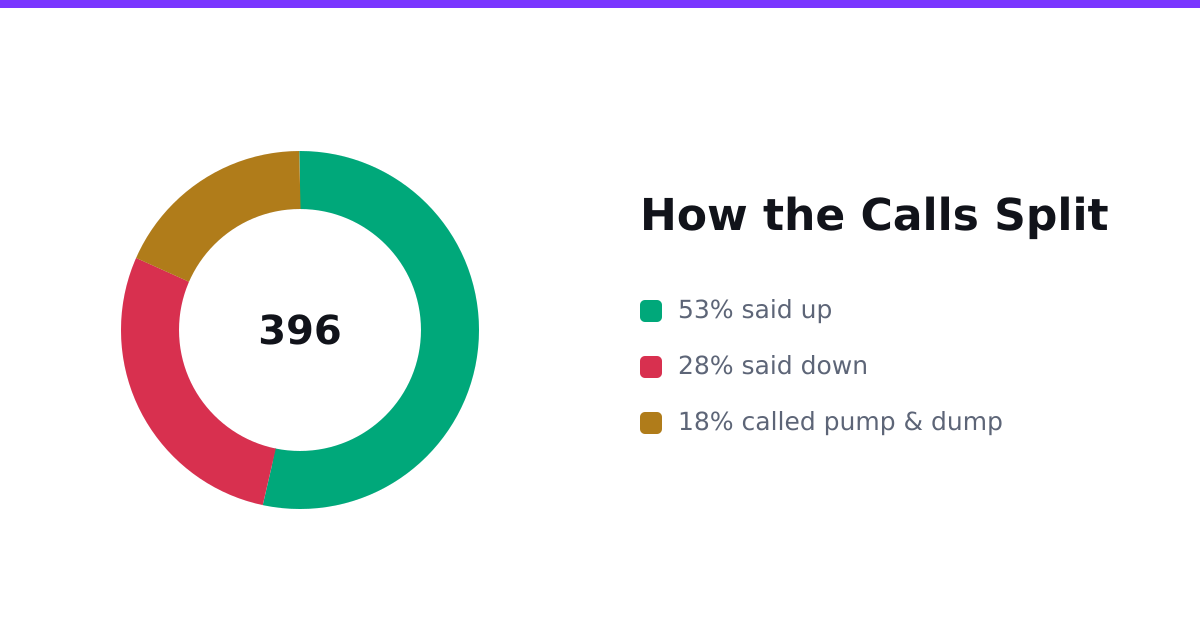
Across the whole session, eighteen unusual moves played out and seven turned out to be pumps dressed up as opportunities. The community called the direction correctly only about 40% of the time, which is roughly the hit rate you'd expect from a board this stacked with trap doors, the kind of day that makes the regulars on CryptoSwings double-check their own confidence before they speak.
What the Day Actually Said
Here is the takeaway, restated plainly: the loudest number is rarely the last number.
ResearchCoin's 25.4% was loud. It got attention, it earned belief, it shaped sentiment. The minus 5% that followed was quiet, almost embarrassed, the sound a chart makes when it gives everything back. On June 7, the gap between those two figures was the whole market in miniature, a day that kept showing people impressive openings and closing every door behind them.
The peak is a headline. The close is the receipt.