The Week HOODIE Turned 1,676% Into Almost Nothing
Seven Days of the Same Lesson
The majors spent the week doing very little worth writing home about, which is usually the market's way of telling you where to actually look. So we looked down, into the micro-caps, and found a week with a spine.
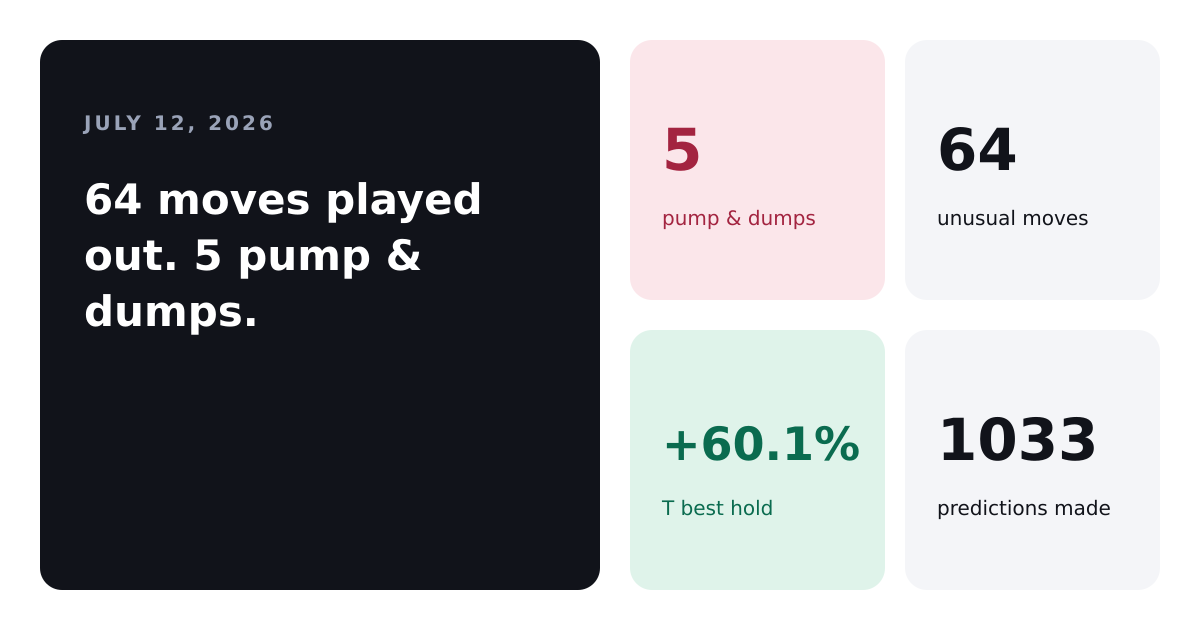
From July 6 to July 12, 2026, three hundred and twenty-nine unusual moves played out across the tape. That is a lot of alarms. And if you strung them together in order, they told one story from start to finish: coins that jumped, crowds that believed them, and gains that dissolved before anyone could bank them. Thirty-six of those moves were confirmed pump and dumps. The rest just behaved like they wanted to be.
By the numbers that matter to a trader trying to stay upright, community sentiment landed on the right side of these moves about 44 percent of the time across the week, according to data compiled by CryptoSwings. That is worse than a coin flip. It is the kind of stat that makes you wonder whether the crowd was reading the market or the market was reading the crowd.
The week had a beginning, a middle, and an end. The end had a name.
The Coin That Ran Off a Ledge
The scene that defined the whole seven days belongs to HOODIE, and it is a short scene, because these things always are.
Set it up. A micro-cap, quiet, unremarkable, the kind of ticker you scroll past without a second thought. Then it moved. Not a polite move. Over the course of a single day, HOODIE climbed 1,676.5 percent.
Sit with that shape for a second. A gain that size is not a rally. It is a countdown with a very short timer. Sentiment leaned bullish while it climbed, and you can understand why. A chart pointing straight up has a gravity of its own. It pulls people in. It looks like a party you are late to.
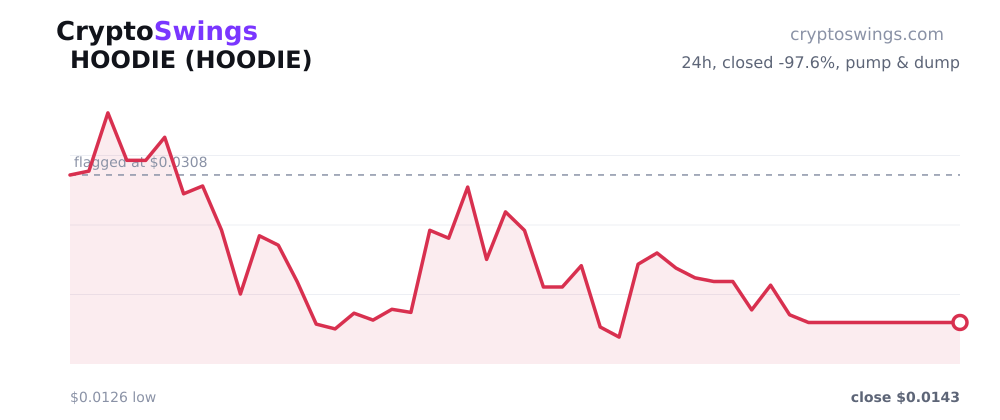
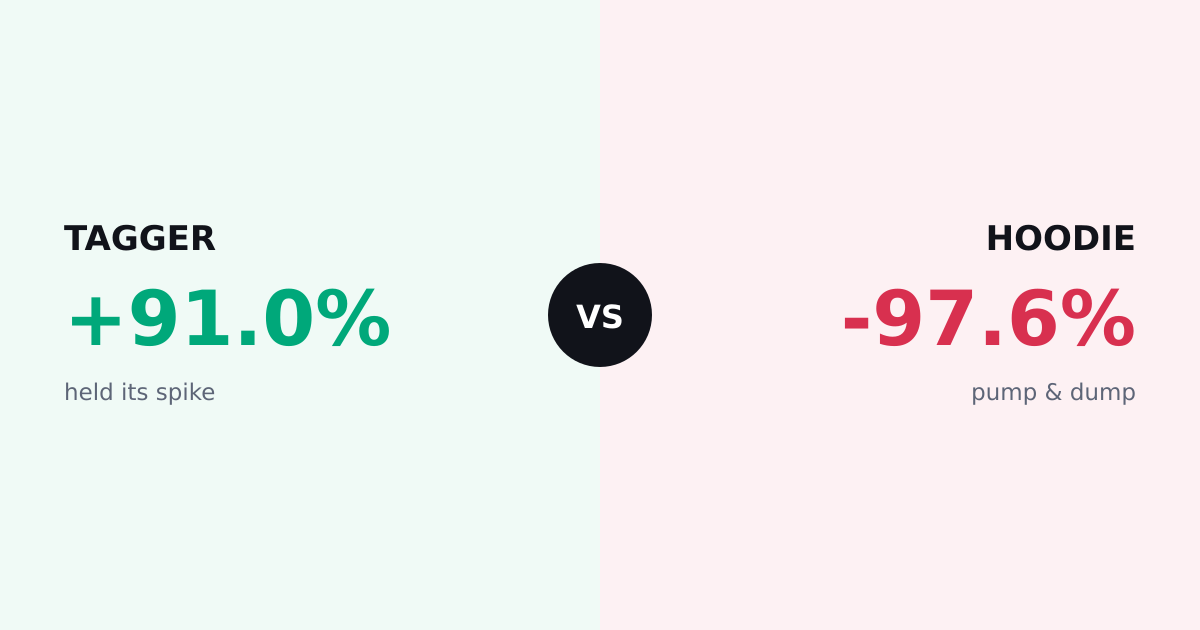
Then came the resolution, and it was not gentle. HOODIE ended the episode down 97.6 percent from where it was detected. Nearly everything the spike created, it uncreated. The bullish read was wrong, and only a minority of watchers saw the drop coming before it arrived. It was a confirmed pump and dump, which is the technical way of saying the exit was built into the entrance.
Almost seventeen hundred percent up. Ninety-seven point six percent down. The gap between those two numbers is where the week lived.
What the Structure Actually Showed
Zoom out from the one spectacular corpse and the pattern holds across the board.
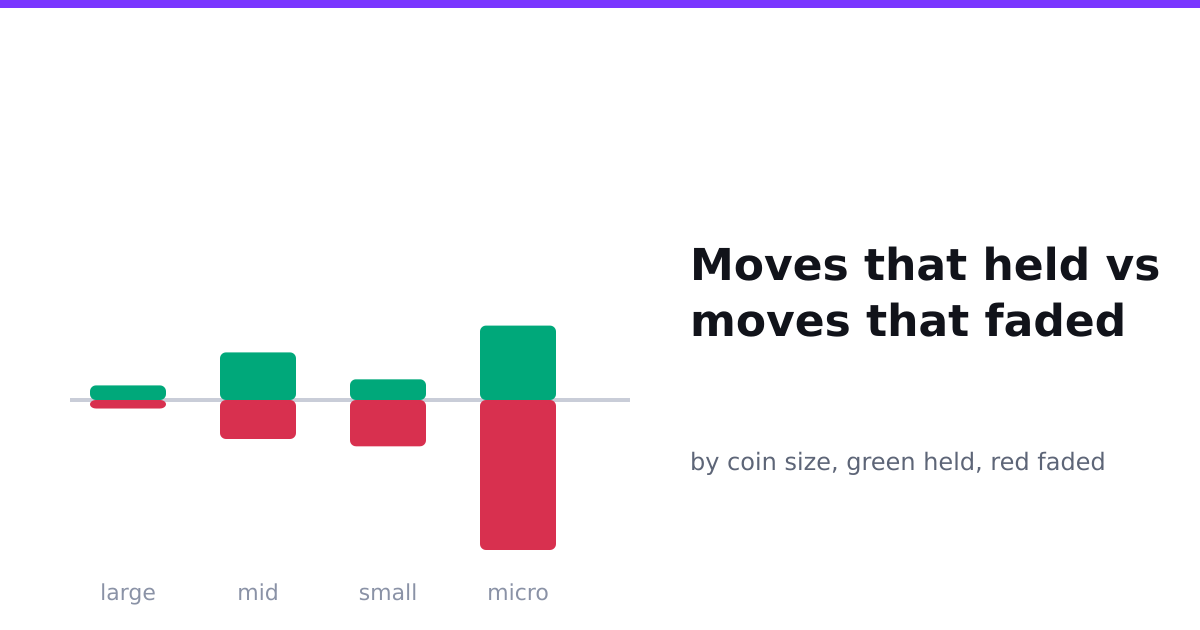
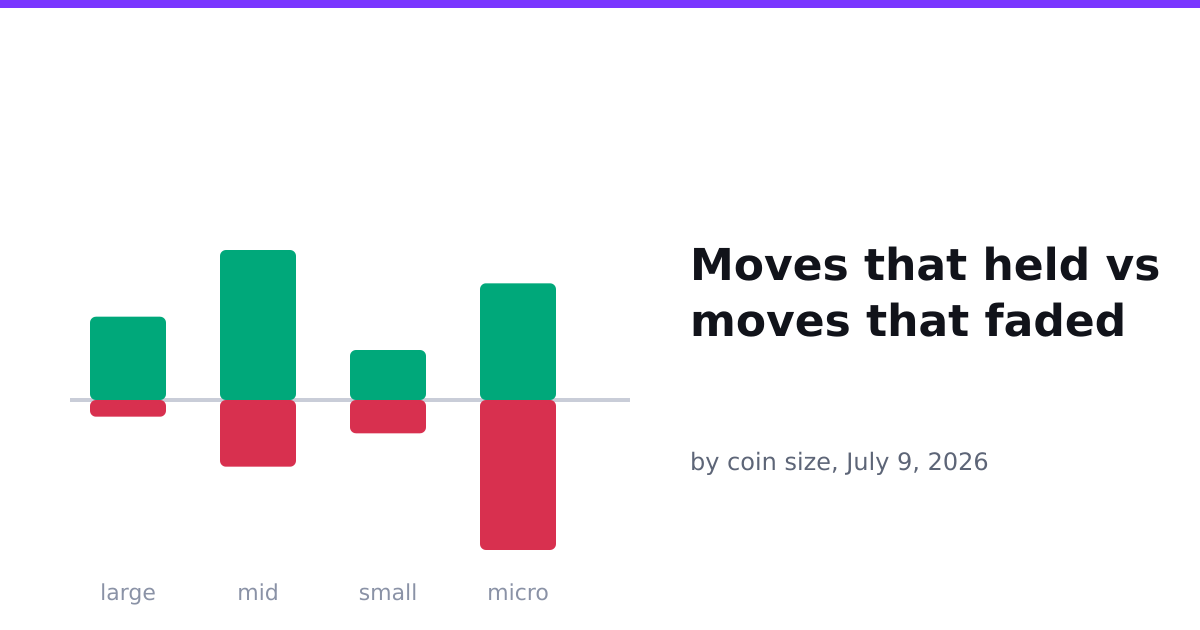
The loud moves clustered in the micro-caps, and the micro-caps clustered in the red. Of the biggest swings the radar flagged all week, the direction of travel by the end was almost uniformly downward. The move up got the attention. The move back down got the receipts.
This is the uncomfortable texture of a micro-cap week like this one. The size of the initial jump told you nothing useful about where the coin would settle. If anything, the bigger the spike, the harder the return trip. HOODIE proved it at the extreme. The rest of the field just proved it more quietly.
And the sentiment number underlines it. When the crowd is right less than half the time, the crowd is not leading the move. It is chasing it. There is a difference, and that difference cost people all week.
The Quieter Counterpoint
Not every move detonated. Some just quietly let the air out, and for that story the week hands us Hoodrat, which is a different animal entirely despite the neighboring name.
The setup was familiar. A micro-cap, a burst of interest, sentiment that strongly leaned bullish. This was not a lukewarm maybe. The read was confident. People looked at Hoodrat and saw somewhere worth being.
The move itself was fast and contained. In about an hour, Hoodrat jumped 90.4 percent. Half of HOODIE's daily insanity, packed into sixty minutes. On the way up it looked like the same story about to repeat.
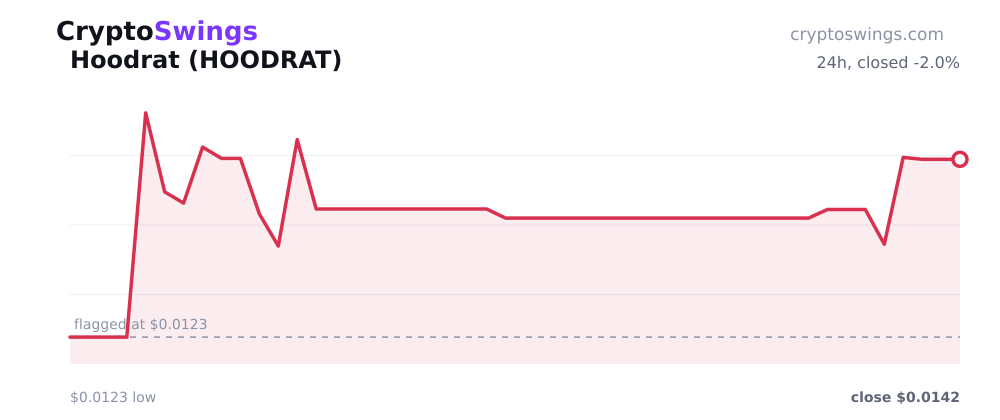
But here is the counterpoint. Hoodrat did not collapse. It finished down just 2 percent from where it was flagged, essentially back where it started, no smoking crater, no confirmed pump and dump. The gain evaporated, but nothing dramatic replaced it. The bullish read was still wrong, in the strict sense that the coin did not end higher. It was just wrong quietly, which is its own kind of lesson. Even when a micro-cap declines to blow up in your face, it can still walk you in a full circle and hand you back your bus fare.
Strong conviction, tiny result. That was the softer version of the week's message. HOODIE was the shout. Hoodrat was the shrug.
The Rest of the Field Told the Same Tale
The supporting cast filled in the middle of the arc, and they mostly rhymed with the leads.
PUMPCADE ran up in about an hour on narrowly bullish sentiment and closed down 18.2 percent, another bullish read that did not survive contact. CUPSEY popped 49.5 percent and then halved itself, ending down 50.2 percent as a confirmed pump and dump that hardly anyone flagged in advance. OpenGradient climbed 45.9 percent before sliding 32.2 percent, and it earns a small footnote as the one big swing where the crowd actually read the direction correctly, even if almost nobody called the reversal early.
Elsewhere the tape kept the theme honest. Talus turned up again and finished down 21.7 percent on a confirmed pump and dump. LAB shed 33.7 percent. Alien Worlds drifted down 8.6 percent, a gentle loss by this week's standards. Yei Finance, remarkably, did close the week almost exactly flat at 0.2 percent, which counts as a stable outcome in a field this jumpy.
The lone genuine survivor of the upside was TAGGER, up 91 percent by the end, though it too carried the pump-and-dump label, so even the week's brightest green number came with an asterisk attached.
What Nobody Got Right Twice
Here is the thing the week keeps circling back to. The alarms were loud and frequent, the moves were real, and the direction almost never rewarded the people who believed the direction. The crowd leaned bullish into HOODIE, into Hoodrat, into PUMPCADE, into CUPSEY, and the crowd got handed the same envelope each time.
So the tension carries forward. A micro-cap can post a number like 1,676 percent and keep almost none of it. A confident bullish read can be wrong four times in a row and still feel just as confident the next morning, because the next chart pointing straight up looks exactly like the last one did before it fell.
The market spent seven days repeating one sentence in different fonts. The gains were loud. The keeping was quiet. And somewhere in that gap, three hundred and twenty-nine times, someone decided the chart in front of them would be the exception.
It rarely was.