The Week the Volatility Ran on a Schedule
Six in the Morning, and the Bell Rings
Set your watch by it.
At 06:00 UTC, the small-cap tape woke up and started shouting. Twenty-nine unusual moves flagged in that single hour, more than any other slot across the entire week of July 27 to August 2. An hour later, at 07:00, another nineteen. Then a lull through the middle of the day until 15:00 rolled around and dropped twenty more on the pile.
Two windows. A quiet morning burst and a mid-afternoon aftershock, both reliable enough that you could have made coffee, sat down, and caught the show.
That is the thing about volatility. We talk about it like weather, something that rolls in unpredictably. But for seven days, the chaos kept banker's hours.
Two Hundred and Ninety-Two Reasons to Pay Attention
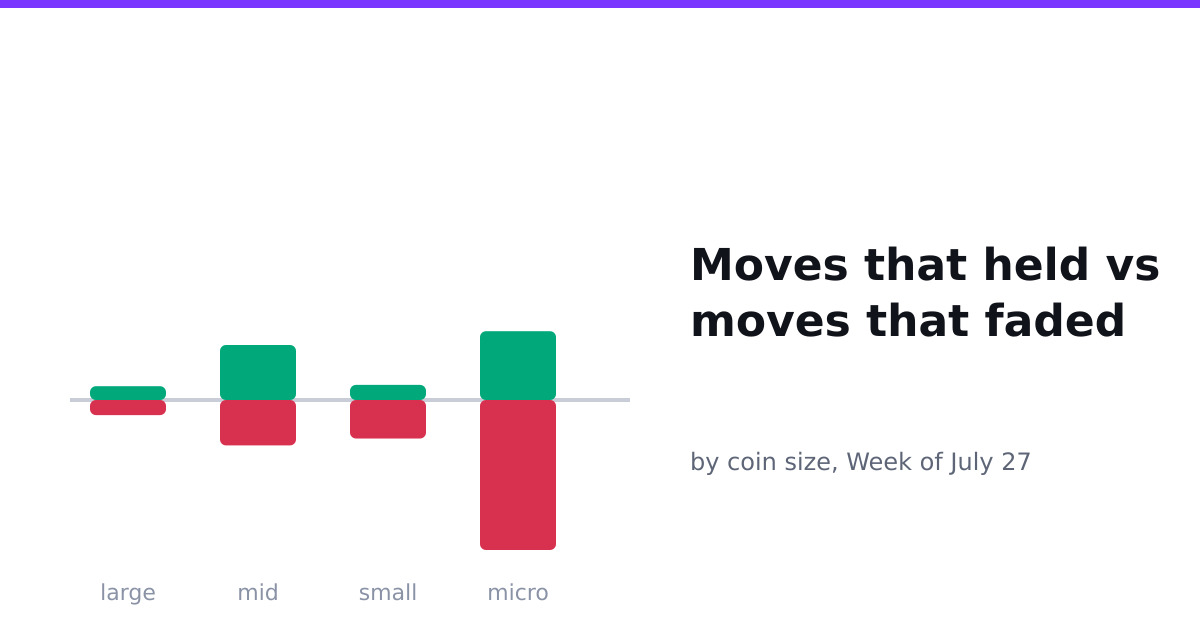
By the time the week closed out, 292 unusual moves had run their full course. Thirty-nine of them were pump and dumps, the kind that go straight up on manufactured excitement and come back down carrying whoever showed up late.
The rest were the ordinary spectrum of small-cap behavior: real breakouts, half-real breakouts, and moves that faded before anyone could decide what they were.
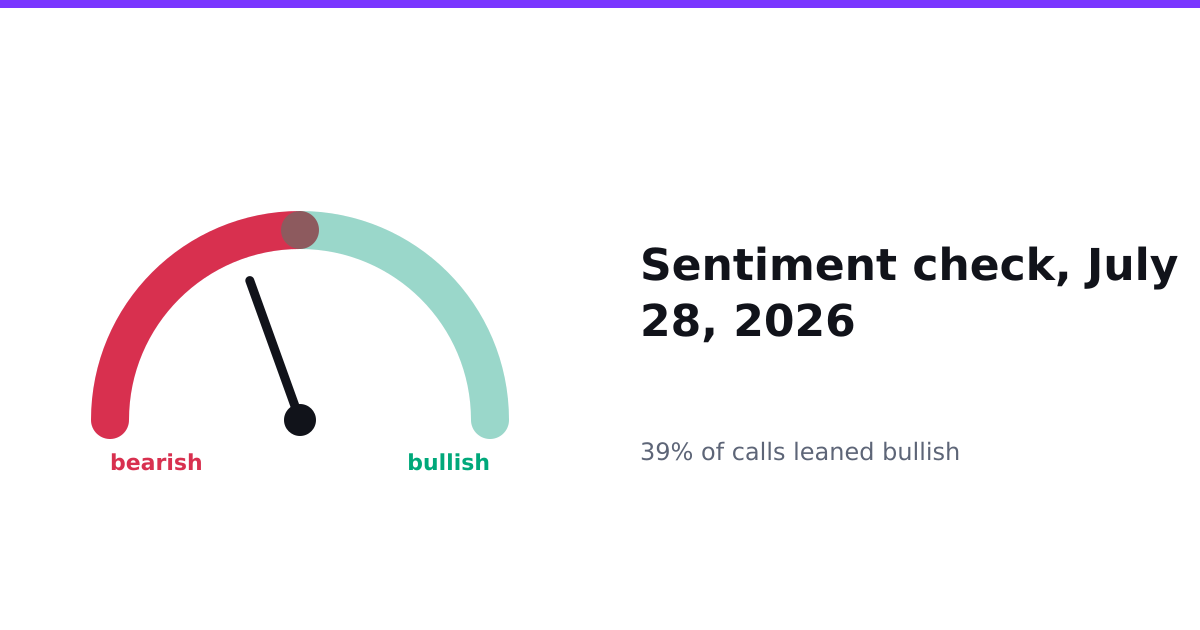
The sentiment reads, for their part, spent the week getting it wrong more than right. Community calls tracked by CryptoSwings landed on the correct side of these moves about 41 percent of the time. That is worse than a coin flip, which is a humbling number for a room full of people who watch charts for a living. When the crowd leaned bullish this week, the crowd mostly leaned into a wall.
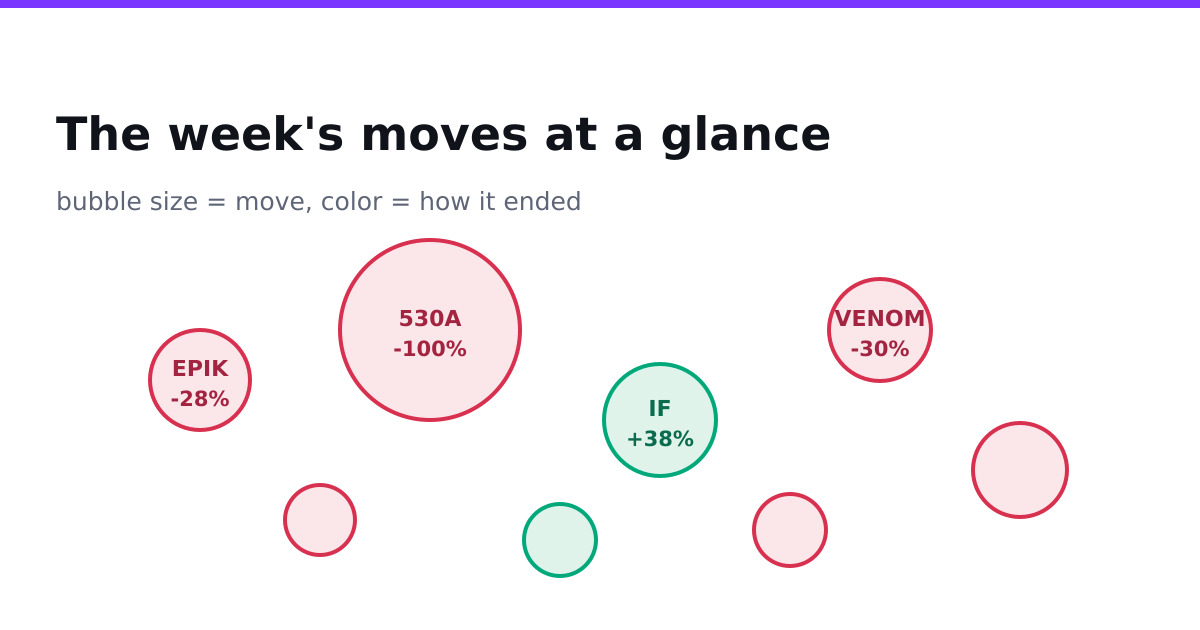
You can see it clearly in the names that mattered. Look down the list of the week's biggest swings and the pattern repeats: sentiment leaned bullish, the read was wrong. Over and over. The optimism was consistent. The results were not.
Take buy and retire, a micro-cap with a name that reads like a mission statement. It flagged up 389.4 percent in about an hour, sentiment leaned bullish, and it finished down 99.8 percent, a confirmed pump and dump that almost nobody flagged in advance. The name promised a plan. The chart delivered a lesson.
*Previously: Buy And Retire Promised 389%, Delivered a Wipeout*
Venom did a smaller version of the same trick: up 64 percent over a day, bullish read, closed down 29.6 percent, another pump and dump that arrived without a warning. BOB, short for Build on Bitcoin, quietly shed 23 percent while the room looked elsewhere.
But the loudest coin of the week was neither a trap nor a slow bleed. It was a bird.
The Duck That Cleared the Building
Here is the scene.
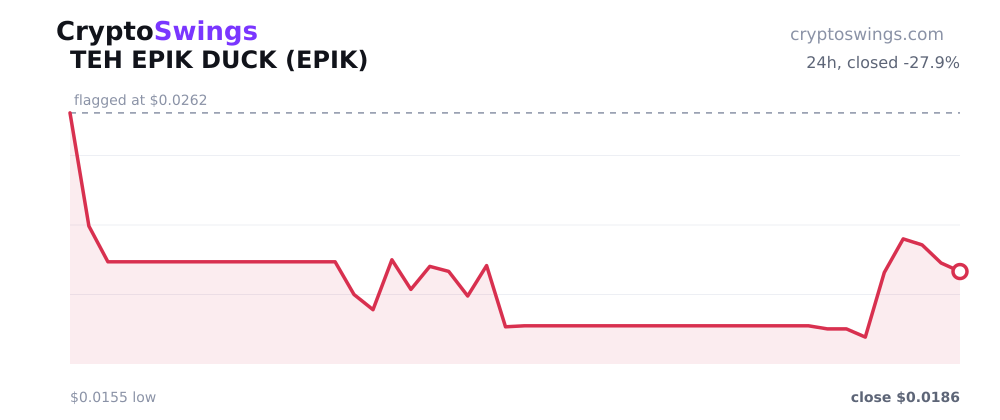
TEH EPIK DUCK, symbol EPIK, is a micro-cap that most people had never typed into a search bar before this week. On July 28 it decided to introduce itself. In roughly one hour, it went up 1,722.3 percent.
Read that speed again, because the speed is the whole story. Not a slow grind over a session. Not a day-long build with volume stacking behind it. One hour. A near-vertical wall of green that had to have felt, to anyone holding at the bottom, like being strapped to something that forgot to check whether it had brakes.
Sentiment narrowly leaned bullish while it happened. You can understand why, it is hard to stare at a move like that and bet against it in real time. The screen tells you the party is on. The screen does not tell you it is already looking for the exits.
And then gravity remembered its job.
By the time the dust settled, TEH EPIK DUCK had finished the whole affair down 27.9 percent. Not a total wipeout, it did not go the way of buy and retire, but a long, ugly slide off a peak that existed for about as long as it takes to notice it. Anyone who saw 1,722 percent on the ticker and anyone who saw the final number were, in effect, looking at two completely different coins.
Here is the detail worth holding onto. For all that violence, this was not a pump and dump. It was flagged, tracked, and it was not a confirmed trap. Which is the quietly unsettling part. A coin can move seventeen hundred percent, round-trip most of it, leave latecomers bruised, and still not fit the technical definition of a scam. Sometimes the market does that on its own, no villain required, just a crowd and a fuse and the ordinary physics of a small float meeting a lot of attention.
The narrowly bullish read on EPIK, for the record, was wrong. Not because the crowd was foolish, because the coin never intended to keep what it grabbed.
What the Clock Was Really Telling You
Strip the week down and you are left with two facts sitting side by side.
The moves came on a schedule. The outcomes did not.
You could time the volatility - 06:00, a little more at 07:00, another round at 15:00 - with something close to confidence. What you could not do was time the direction. The hour told you when the door would open. It said nothing about which coins were walking out richer and which were about to fall through the floor.
That is the honest shape of a small-cap week. The energy is predictable. The payout is not. Thirty-nine pump and dumps hid inside 292 moves, sentiment guessed right less than half the time, and the single most spectacular chart on the board belonged to a coin that gave nearly all of it back without technically doing anything wrong.
The bell rang right on time, every morning. What came through the door was the part nobody could set a watch by.