What IF Asked The Question And Answered It In Red
The Coin That Was A Question And Became A Warning
Most crypto names are trying to sell you something. Ambition, technology, a moon. What IF, at least, is honest about being a hypothetical, and on September 5, 2026 it turned into a cautionary tale in real time.
*Previously: What IF Asked the Question and the Answer Was Down 26%*
The spike came first, the way it always does. A sudden lift, sharp enough to pull What IF out of the background noise and onto the day's radar. For a few minutes it had everything a fast move needs: momentum, a chart that looked alive, and just enough velocity to make you wonder if you were early. You were not early. You were the exit.
Because the answer to "what if I bought this" arrived quickly, and it was written in red. By the time the move finished, the coin had reversed hard and settled at a loss of 22.2%. The question mark in the name did all the work.
Three Numbers, One Familiar Ending
The whole arc of What IF fits into a handful of figures, and they tell the story better than any adjective.
There was the spike that got it noticed. There was the giveback, which took every bit of that lift and then dug deeper. And there was the net, the number that actually landed in anyone's account who arrived late: down 22.2%.
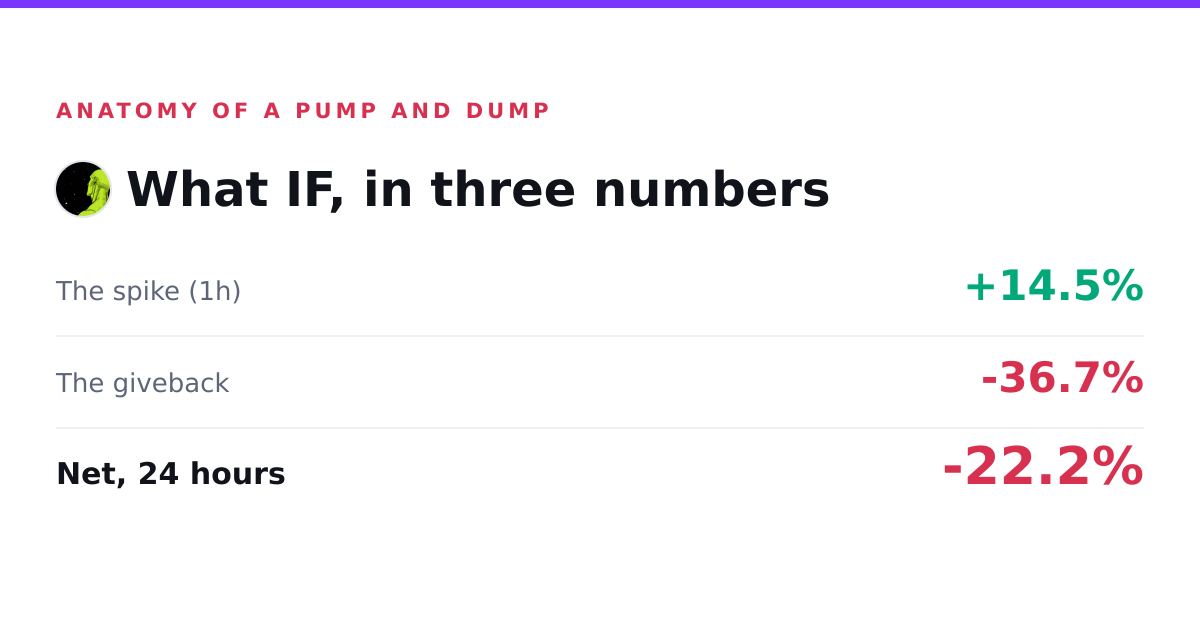
That last figure is the one that matters, because it is the only one that was real at the end of the day. The spike was a shape on a screen. The close was a bill.
Walking The Replay
Play it back slowly. What IF starts the session as one more ticker in the crowd, no reason for anyone to pay attention. Then the buying arrives, fast and coordinated enough to snap the price upward and put the coin in front of eyes that were not looking at it a moment earlier.
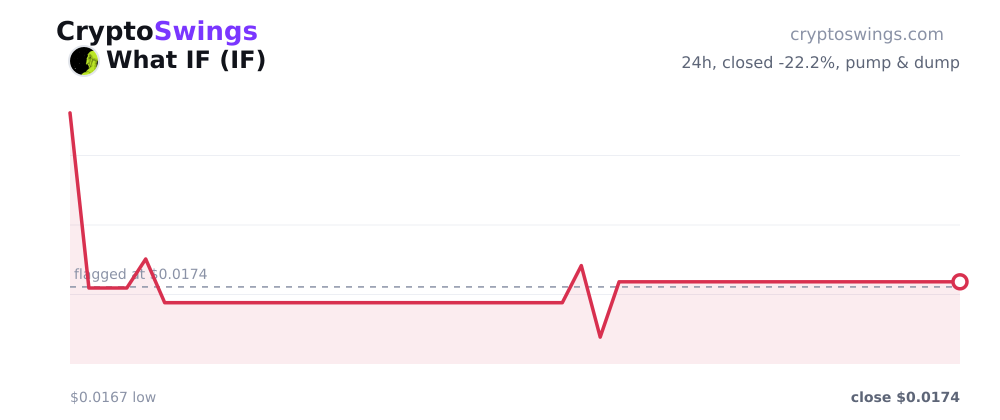
That is the setup and the move, delivered in one motion. What comes next is the part the chart never advertises in advance. The buyers who lit the move do not stick around to admire it. They sell into the excitement they created, the price rolls over, and the descent is steeper than the climb. Everyone who chased the green got handed the red.
By the finish, What IF was not just back where it started. It was well below, down 22.2%, the difference between a move and a trap distilled into a single closing figure. This is the sort of thing you can only really study after the fact, which is roughly what a site like CryptoSwings exists to help you do.
It Had Company
What IF was not alone in this. September 5 confirmed three pump and dumps, and the other two ran variations on the same theme.
A Meme Coin was the harshest of the set. Where What IF gave back a fifth, this one cratered to a loss of 57.1% by the close, a drop deep enough to make the day's other reversals look gentle. The move up was the invitation. The move down was the whole point.
UnifAI Network played the trick more subtly. It closed up 1.7%, technically green, which sounds fine until you remember it had spiked far higher before deflating back to almost nothing. A gain that small after a move that loud is its own kind of trap. The number in the account was positive. The number on the way up was a mirage.
Different coins, different depths, same mechanic underneath: a rush of buying, a burst of attention, and a set of sellers already halfway to the door.
What Kind Of Day This Was
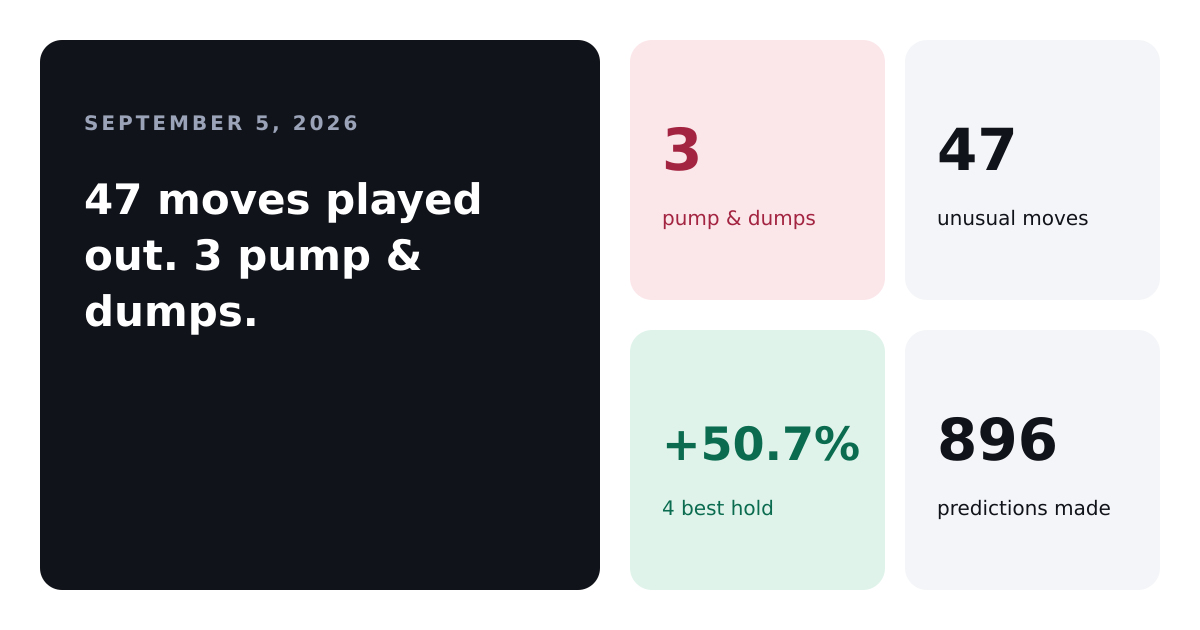
An ordinary session has its share of noise, plenty of moves that mean nothing and a few that mean something. September 5 had 47 unusual moves run their course, and only three of them ended as confirmed pump and dumps. By raw count, that is not a rampage.
But the mood was heavy. Across the day, sentiment landed on the right side only about 35% of the time, which is a polite way of saying the market kept doing the opposite of what people expected. What IF spiked and then answered its own question in the least flattering way possible. The traps that day were not loud in number. They were just very good at what they do.