Biggest Gainers Crypto: The 8 Coins That Reverse Most Often
Some Rallies Have a Short Memory
When people go looking for the biggest gainers in crypto, they usually want the green ones, the coins that spiked hardest on the day. But there is a quieter question underneath that one: which of those gainers actually kept the gain? Across 3,145 flagged unusual moves, one name reversed more often than any other, and it did so with enough repetition to earn the top spot.
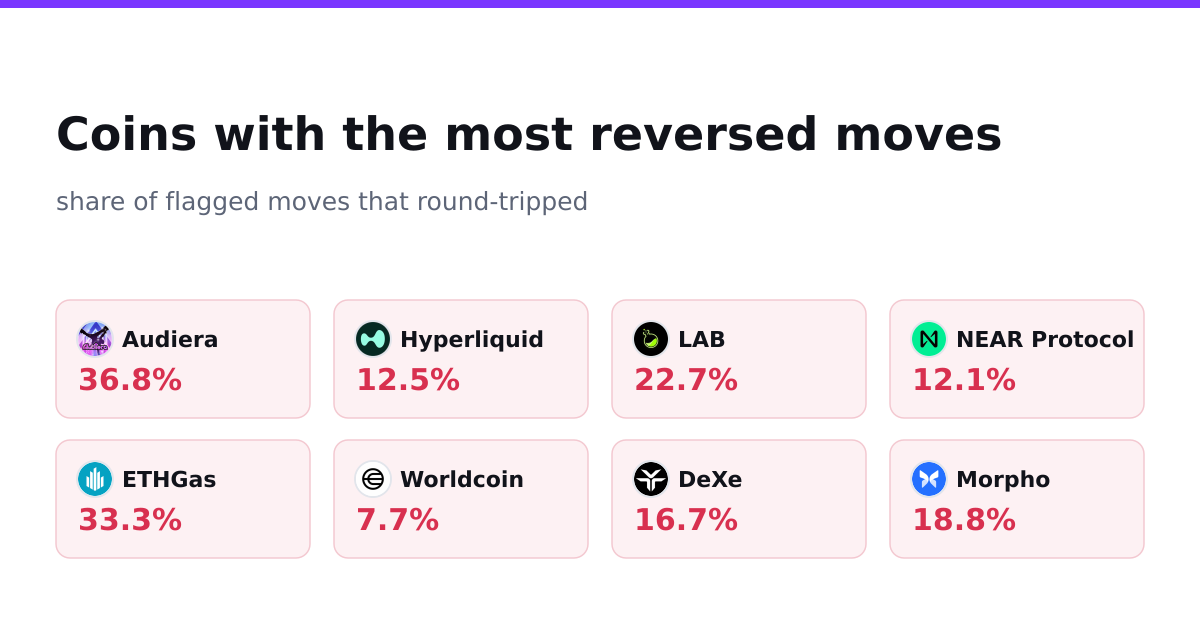
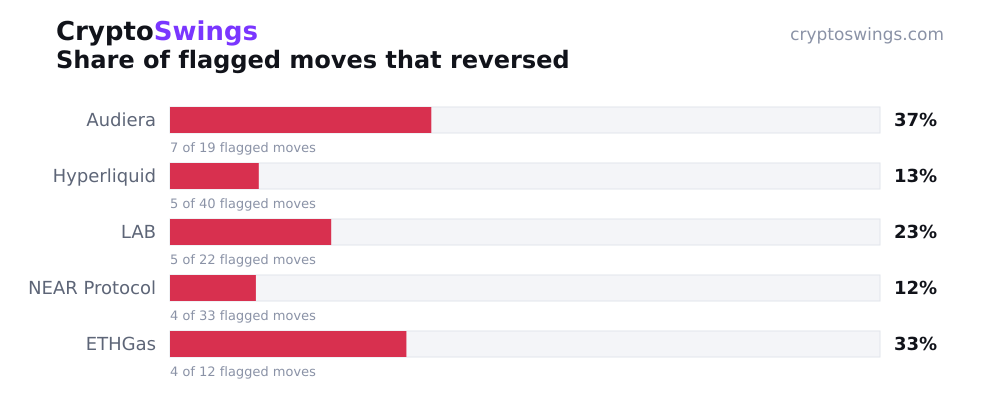
That name is Audiera. Out of 19 flagged moves, 7 of them turned around within a day. That is a reversal rate of 36.8 percent, which is another way of saying that more than a third of Audiera's notable runs did not survive to the next day's price check. The other roughly two thirds held, but no coin on this list gave back a larger share of its moves.
*Previously: Audiera Drops Its Guard, Then Flips the Whole Script*
The list below it is a mix of familiar heavyweights and smaller names, all sharing one trait: they showed up on the flagging radar often enough to be worth watching, and a chunk of the time, their standout moves reversed course.
The Names Behind the Numbers
Audiera sits at the front with that 36.8 percent rate on 19 moves. It is the clearest case of a coin whose spikes came with a return receipt attached.
Right behind it on rate is ETHGas. Twelve flagged moves, 4 reversals, a 33.3 percent turnaround rate. Fewer moves overall, but a third of them changed direction within a day. When ETHGas ran, it ran hot and cooled fast about as often as not.
Then there is LAB, with 22 moves and 5 reversals, a rate of 22.7 percent. Roughly one in every four or five standout moves flipped. Morpho posted 3 reversals on 16 moves, an 18.8 percent rate. DeXe landed at 16.7 percent, 3 reversals across 18 moves.
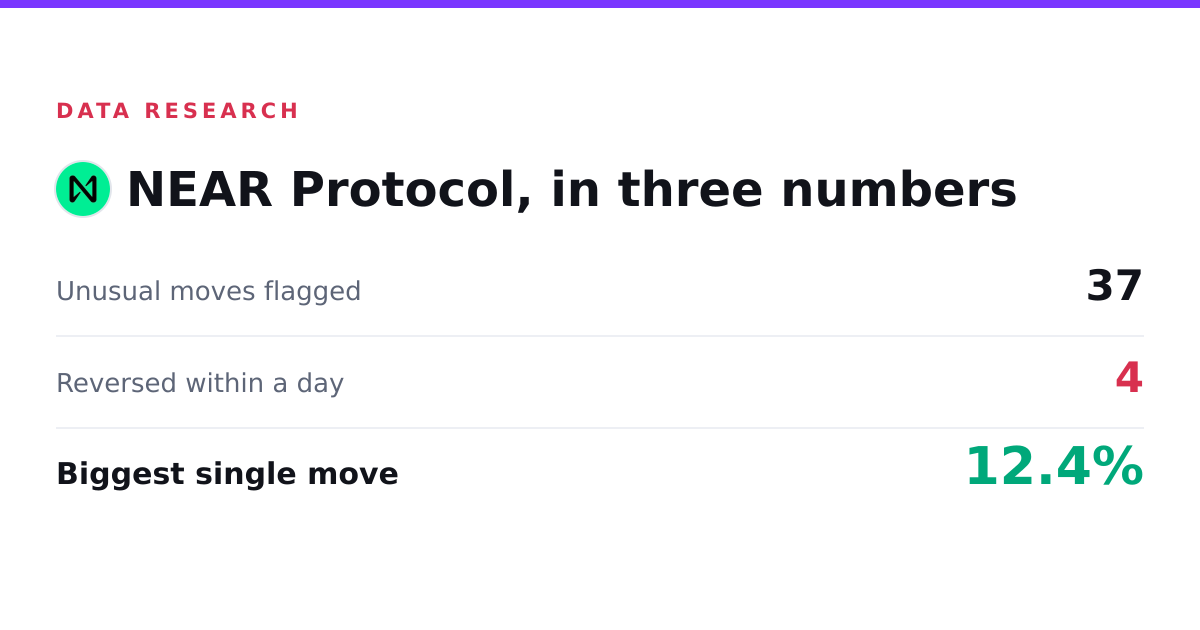
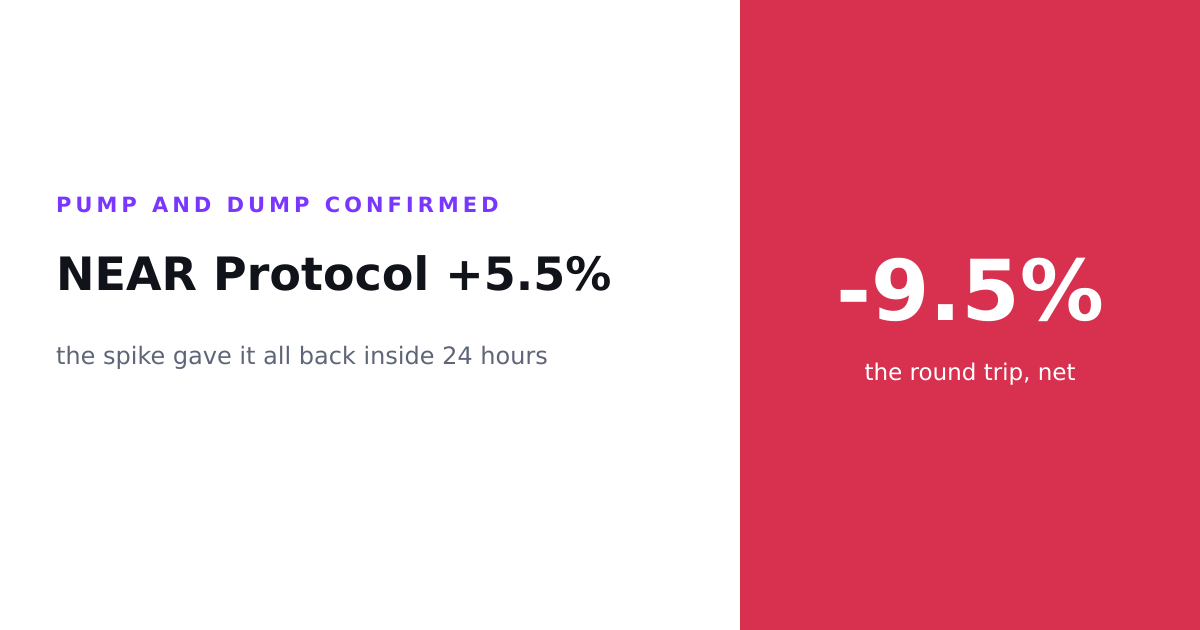
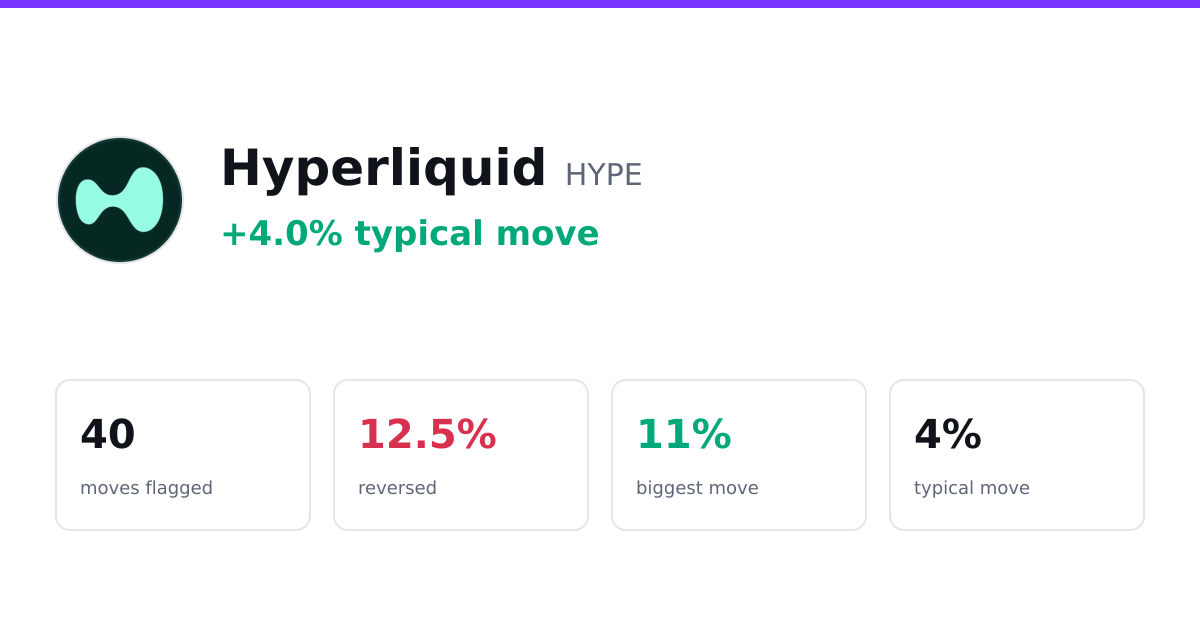
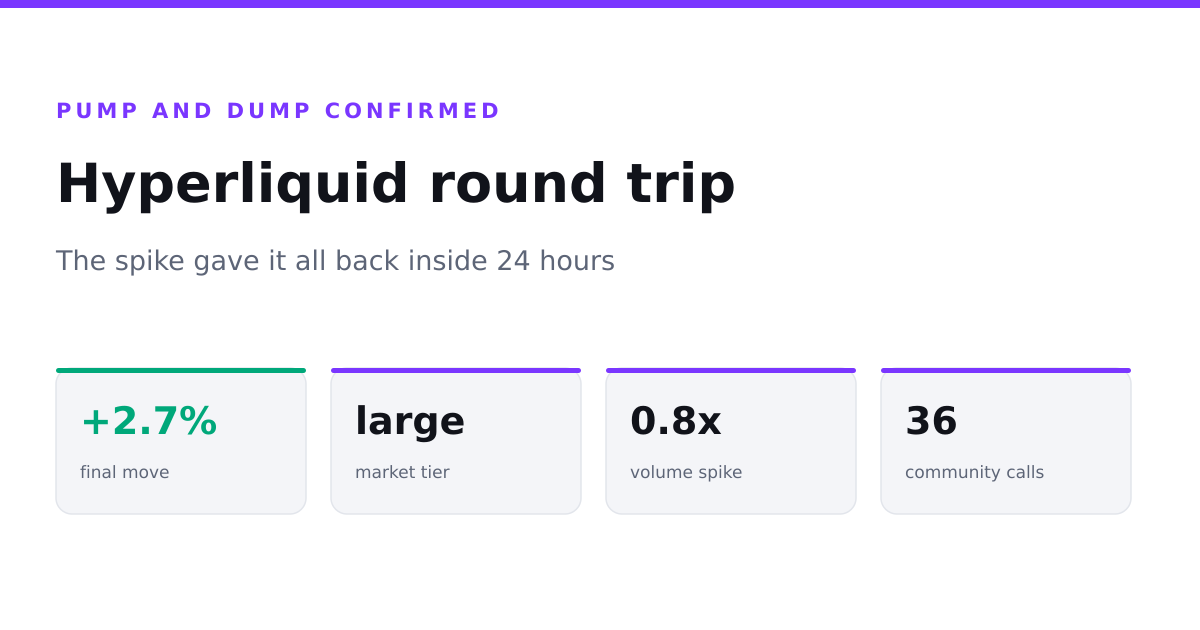
Now for the contrast, because it matters. Hyperliquid was flagged 40 times, the most of anyone here, and only 5 of those reversed. That is a 12.5 percent rate, meaning 87.5 percent of its notable moves held their ground one day later. NEAR Protocol looked similar: 33 moves, 4 reversals, a 12.1 percent rate. And the steadiest of the bunch was Worldcoin, with 39 flagged moves and just 3 reversals. A 7.7 percent rate. When Worldcoin made a scene, it almost always meant it.
So the same list holds two very different kinds of behaviour. Some coins spiked and slid back. Others spiked and stayed put. The rate is the whole difference.
Why a Big Rate on a Small Pile Deserves a Squint
Here is the trap in reading a table like this, and it is worth slowing down for.
A high reversal rate on a dozen moves is not the same quality of evidence as a lower rate on forty. ETHGas turned around a third of the time, but that third is 4 reversals out of 12. Shuffle one or two of those moves the other way and the rate swings hard. The sample is small enough that a single week could redraw it.
Hyperliquid, meanwhile, carries a lower rate but leans on 40 flagged moves. That is a sturdier foundation. Its 12.5 percent is a claim you can put more weight on, precisely because there is more underneath it. Same goes for Worldcoin's 7.7 percent across 39 moves and NEAR's 12.1 percent across 33.
None of this makes Audiera's 36.8 percent wrong. It is exactly what the record shows. But 19 moves is a thinner base than 40, so the honest reading treats the top of the list as a louder signal on a quieter microphone. The rate tells you what happened. The move count tells you how much to trust it.
That distinction does more work than any single percentage on the board. A big number on a small pile is a hint. A steady number on a big pile is a pattern.
How the Moves Were Counted
The mechanics here are simple, and worth being upfront about.
Every figure comes from automatically flagged unusual moves. When a coin made a move sharp enough to stand out from its own baseline, it got flagged. Then, one day later, that move was checked against the real market price to see what actually became of it. Did the move hold, or did it reverse? That next-day outcome is the entire measurement. No interpretation, no story added after the fact, just where the price sat a day on from the flag.
To keep noise out, a coin had to clear a minimum number of flagged moves before it could appear on this list at all. That is why the smallest entry here still carries 12 moves and the largest carries 40. A coin that spiked once and vanished never made the cut, because one move tells you nothing about a tendency. Repetition is the price of admission. The figures throughout come from CryptoSwings data on those flagged moves and their next-day outcomes.
What the Biggest Gainers in Crypto Actually Do the Next Day
So, the direct question: among the biggest gainers in crypto that get flagged again and again, which one reverses most often? Audiera, at 36.8 percent, reversing 7 of its 19 flagged moves within a day.
That is the headline answer, but the fuller one is more useful. The coins that showed up repeatedly split cleanly into two camps. In the reverse-prone camp you have Audiera at 36.8 percent, ETHGas at 33.3 percent, and LAB at 22.7 percent, coins whose standout moves came with a real chance of unwinding by the next day. In the hold-their-ground camp you have Worldcoin at 7.7 percent, NEAR Protocol at 12.1 percent, and Hyperliquid at 12.5 percent, coins whose big moves mostly stuck.
The lesson buried in that split is that "biggest gainer" and "durable gainer" are not the same title. A coin can top the board on a given day and hand a meaningful slice of those runs back before the next price check. Another can move less dramatically but keep almost everything it grabs. On this list, Worldcoin was the closest thing to a coin that meant what it said, holding 92.3 percent of its flagged moves. Audiera was the one most likely to take it back.
The Things This Record Can't Tell You
Now the fine print, because a table this tidy can flatter itself.
This is a record of what happened, not a map of what happens next. Audiera's 36.8 percent describes 19 specific moves that already resolved. It is not a setting the coin is locked into and it does not promise anything about the next flag. Reversal rates drift. A quiet stretch or a wild one could nudge every number here, especially the ones built on the thinner piles.
The window is also fixed. Every measurement was taken one day after the flag, and every reversal is a reversal on that timeline. A move that held for a day and slid on the third would still count as held here. Stretch or shrink that horizon and the whole board could shuffle.
And the entry bar cut coins out. Anything that did not clear the minimum flagged-move count never appeared, which means there are surely coins out there with wilder reversal habits that simply did not spike often enough to qualify. This list is not the most volatile coins in crypto. It is the most volatile among the ones that showed up enough to measure.
What would change the picture? More moves. Every coin here keeps trading, keeps spiking, keeps getting flagged, and each new move either firms up its rate or bends it. The smaller samples, Audiera and ETHGas and the rest, will move the most. The bigger ones, Hyperliquid and Worldcoin and NEAR, will barely budge.
For now the record is clear on one thing. The biggest gainers in crypto are not all built the same. Some spikes settle in and stay. Some spikes hit the tape, take a bow, and walk right back out the door.