Crypto Coins That Reverse Most Often: 8 Repeat Offenders
The market's favorite trick is the one where a coin makes a bold move, gets everyone leaning the same direction, and then calmly changes its mind by the next morning. Most coins do it once in a while. A few do it often enough that you could set a watch by them.
The Coin That Kept Changing Its Mind
Start at the top of the list, which is really the bottom, depending on how you feel about follow-through. That spot belongs to Audiera.
*Previously: Audiera Drops Its Guard, Then Flips the Whole Script*
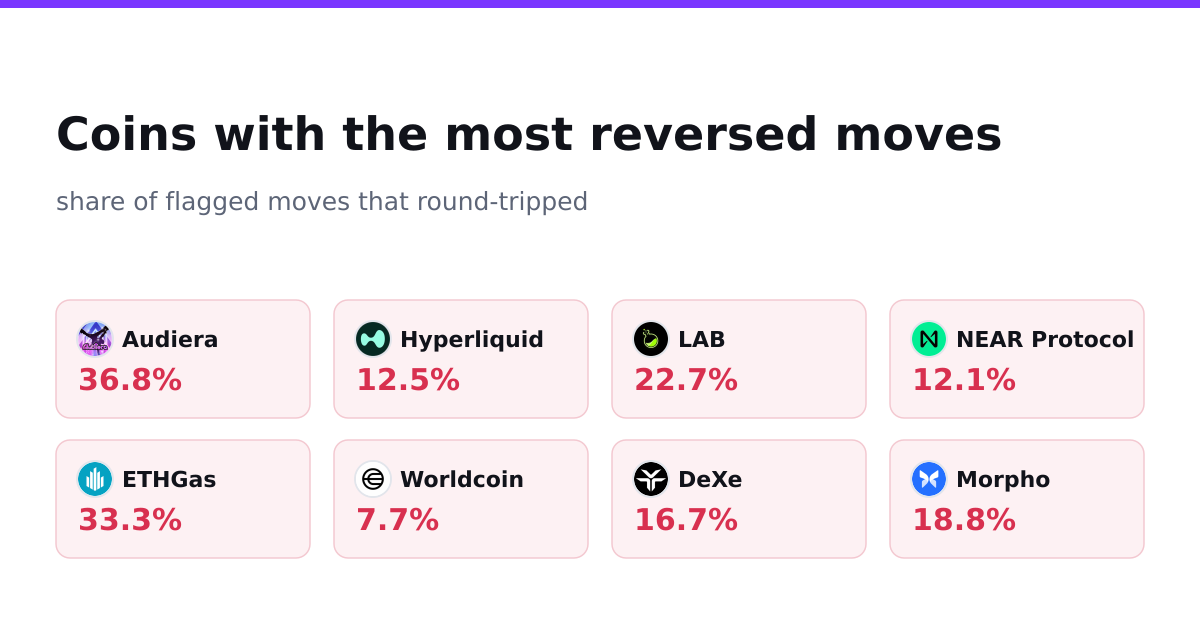
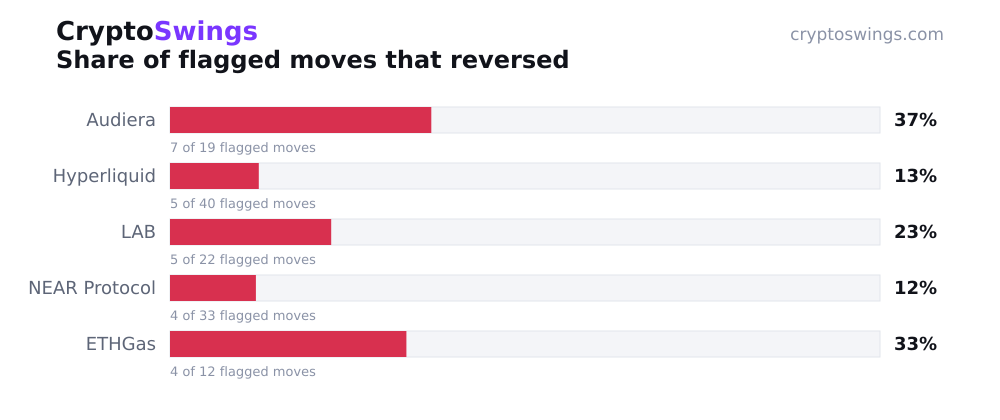
Across 19 flagged moves, Audiera reversed 7 of them within a day. That is a reversal rate of 36.8 percent, meaning better than a third of the time, whatever big swing it made got walked back before the next session settled. The other 63.2 percent held. Still a majority, but not the kind of majority you build a plan around.
A coin that reverses seven times out of nineteen is a coin with a habit worth knowing. It does not mean anything sinister is happening. It just means the moves themselves are less load-bearing than they look on a chart.
The Rest of the Fickle Few
Behind Audiera, the pattern spreads across a mix of names you would recognize and a few you would not.
ETHGas is the sharpest example of small-sample volatility. It reversed 4 out of just 12 flagged moves, a 33.3 percent clip. High rate, thin record. Hold that thought, because it matters in a minute.
LAB posted 5 reversals across 22 moves, landing at 22.7 percent. Morpho gave back 3 of 16 for 18.8 percent, and DeXe came in just behind at 16.7 percent, also on a modest count.
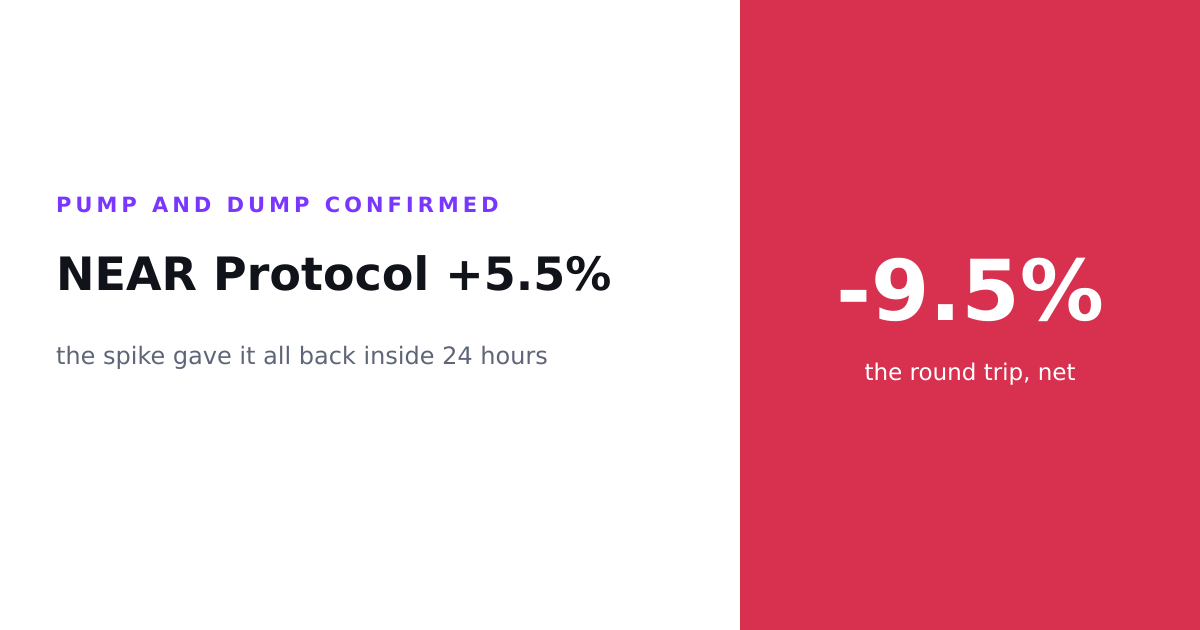
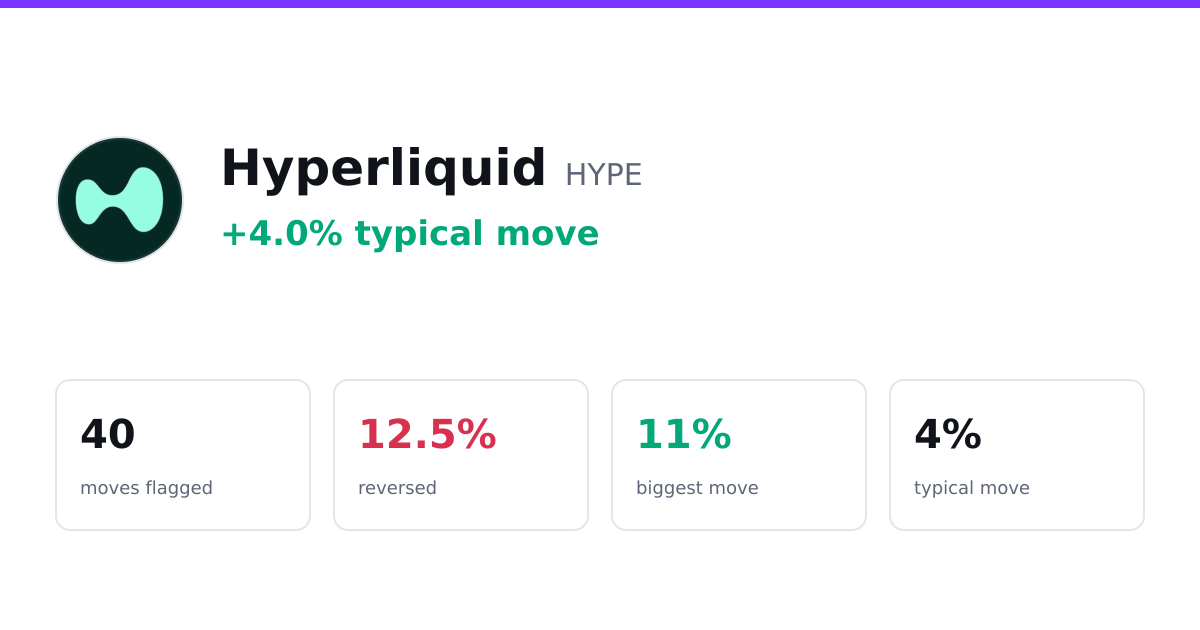
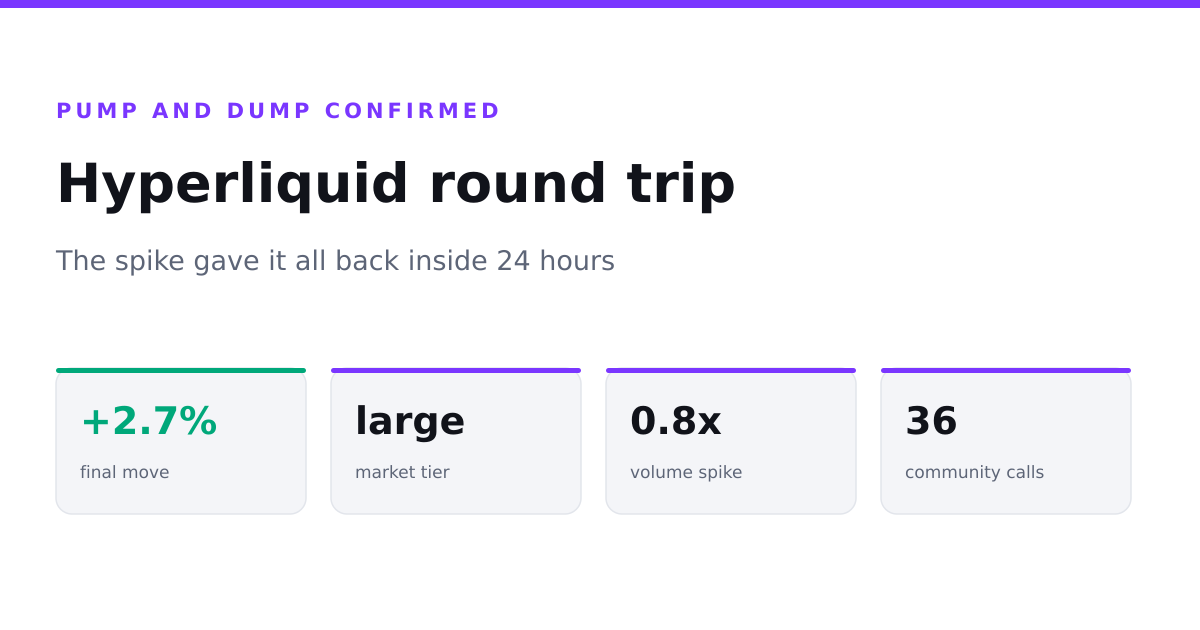
Then there are the heavier hitters, the ones that showed up on the tape again and again and mostly kept their word. Hyperliquid was flagged 40 times and reversed only 5, a tidy 12.5 percent. Its moves held 87.5 percent of the time. NEAR Protocol looked nearly identical, 4 reversals across 33 moves for 12.1 percent. And Worldcoin was the steadiest of the whole group, reversing just 3 of 39 flagged moves. That is a 7.7 percent reversal rate, which is another way of saying that when Worldcoin moved, it usually meant it.
So the same list holds both the twitchiest coin and the most dependable one. That is not a contradiction. That is the entire point.
Why a Big Number on a Small Record Should Whisper, Not Shout
Here is the caveat that separates a real read from a fun one.
Audiera's 36.8 percent sits on 19 moves. ETHGas's 33.3 percent sits on 12. Those are eye-catching rates, but they are built on a handful of events, and a handful of events can swing hard on a single flip. Two moves going the other way would reshuffle the whole thing.
Compare that to Worldcoin at 7.7 percent across 39 flagged moves, or Hyperliquid at 12.5 percent across 40. Those percentages are backed by real repetition. A lower rate measured across forty samples is sturdier evidence than a scary rate measured across a dozen.
Put simply: the size of the record matters as much as the number on top of it. A coin that reversed a third of the time over 12 moves is telling you something softer than a coin that held nearly everything over 40. Read the denominator before you trust the headline.
How These Were Counted
None of this was hand-picked. Every move in the study was flagged automatically as unusual, then measured against the real market price one day later to see whether it held its direction or gave it back. The whole exercise covered 3,141 flagged moves, and the reversal figures here come from that dataset, as compiled by CryptoSwings.
To land on this list, a coin had to show up repeatedly. One dramatic reversal does not earn a spot. A coin needed enough flagged moves to make its rate mean something beyond noise, which is exactly why the record counts appear next to every percentage.
What you are left with is a simple, honest snapshot of behavior. Some coins deliver a big move and stick around to defend it. Some deliver it, take a bow, and quietly refund the audience by morning. The tape does not editorialize. It just keeps count, and this is the count.